Thursday, May 30, 2013

Meet the Beatles


One of the first record albums I bought was Meet The Beatles. I went to the local record store and plopped down $2.99 of my allowance. It was one of the best investments I made in my young life. I played the record over and over. Every song spoke to my youthful ears.

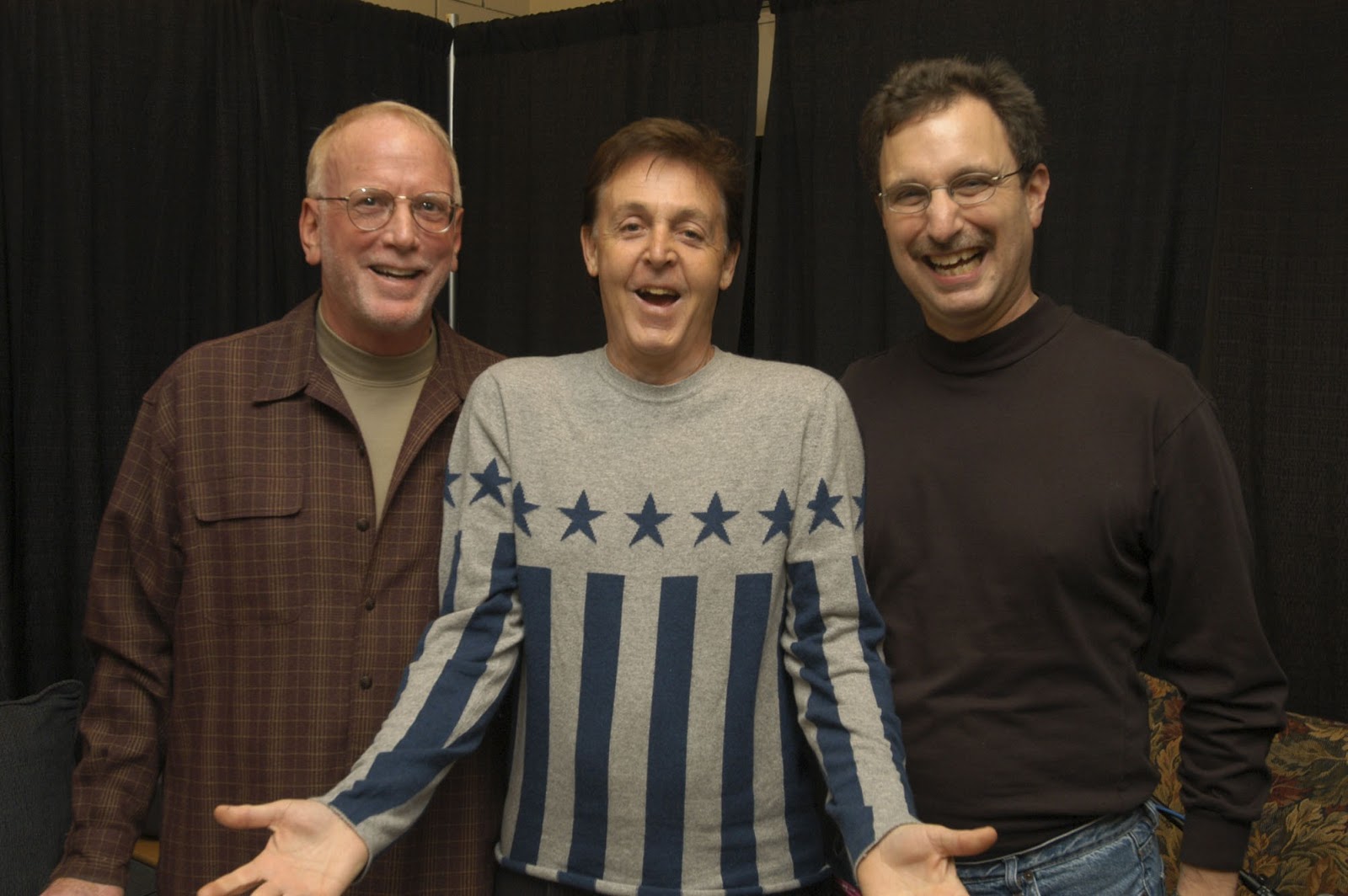
When I listened to the record, I never imagined that one day I would "Meet the Beatle" and get to sit down and spend twenty minutes in conversation.

It happened on November 4, 2005. Paul McCartney and his band were in Portland at the Rose Garden Arena on their American tour. My radio station KINK was selected to be the official radio station of the concert, and we would get to have an exclusive interview with Paul.

The Rose Garden Arena has all sorts of tunnels and private areas underneath the seats. Paul's crew was assigned the Trailblazers locker room as their headquarters. Pipe-and-drape covered the lockers. A line of tables on both sides of the room held computers where Paul's staff took care of all of the financial business of the tour. At the end of this room was a living room setup. A huge vegetarian kitchen was set up in a big open space, where Paul's personal chef was preparing a vegan feast for the crew.

KINK's morning man Les Sarnoff and I were the two people invited to be part of this special moment. We were asked to wait in the living room area.

I had prearranged an ISDN connection between the Rose Garden and KINK. ISDN allows for a studio quality connection from a remote location. The link was up and KINK was playing Beatles songs anticipating the live on-air interview with Paul.

There was lots of activity all through the evening, and things really started to get busy on the walkie-talkies as Paul's limo approached the Rose Garden. Then suddenly, as if on cue, the entire staff of a dozen or so workers all got up and filed out of the room, leaving only me and Les. Moments later, Sir Paul McCartney walked in by himself.

He came and sat between us. We exchanged pleasantries and we told him we'd be going live in just a few moments. He put on a pair of headphones to hear the station, and what was playing was the Beatles "The End" from Abbey Road. He started singing along with his own vocals from over 35 years earlier - "And in the end... the love you take... is equal to the love... you make." The song ended and the interview began.

Paul was a gracious interview. Les was prepared and had no problem with taking up twenty minutes of air time talking to Paul. I mean, he's a freaking Beatle. How much bigger can you get than that? Paul told some amazing stories on the air. He also was very much up-to-speed on new technology. He explained how EMI Parlophone was so meticulous about getting a high quality recording. The tapes have been kept in great shape over the years.
The process of transferring all of the Beatles recordings to digital was underway under the direction of George Martin and his son Giles. Paul explained that most of the original Beatles songs were recorded onto 4 tracks. To allow for all of the effects, the individual instruments were combined. For example, the drums and bass were mixed down to one track.

In the digital world, the engineers at Abbey Road studios are using notch filters and pulling out the cymbals, the kick drum, the snare, the bass and making individual tracks for each of those for remixing. Some of these remixes have been released on various compilations (most notably LOVE), but ultimately, the entire Beatles collection will be reissued with a more balanced mix and higher fidelity. Paul said that with today's digital technology, you can actually improve the quality of recordings, instead of letting them degrade as they did when tape transfers were done.

It was a wonderful time spent with Paul. There were no distractions in the room and his focus and complete attention was on us and the interview. When it was done, he recorded some personal station IDs and then it was off to the show. First song of the set: "Magical Mystery Tour!"

Yes, it was a magical mystery moment, to be sure!
Wednesday, January 26, 2011

Exploding Radio

I was sitting on the balcony of my apartment looking out over Biscayne Bay looking toward the city of Miami.  It was a beautiful calm night in the autumn of 1973 and all across the Florida landscape, the city lights shimmered across the water.

Suddenly, what looked like a flash of lightning lit up the eastern sky and an entire portion of the city went black. An explosion at a transformer station knocked out the power. Shortly after, another explosion happened at a transformer station in another part of the city. The electricians union was on strike and some weird things were happening all across the power grid.

At WMYQ, the station where I worked, the power went off, and then surged on again.  The surge was so powerful that it fried much of the sensitive electronic equipment.  The ballasts in the florescent light fixtures started exploding – the one positioned over the on-air console started dripping hot oil right into the main control board.  WMYQ’s studios were ruined.

The station needed to stay on the air.  But with no studio to do the show, what could be done?  A long-distance telephone line was quickly hooked up to the KCBQ production studio, Bartel’s sister station 2300 miles away in San Diego. What listeners heard for the next few days was truly astounding. They heard a 100,000 watt stereo powerhouse FM station with a poor quality mono telephone signal. Shotgun Tom Kelly and other KCBQ jocks were playing nothing but The Beatles and The Stones.


Soon after the equipment was repaired at WMYQ and the station was broadcasting, a power outage occurred at competitor Y100’s studios.  In a similar way, Y100 had to go to the transmitter to broadcast.  What listeners heard on Y100 was a record player with a microphone positioned in front of the speaker.  When music was playing, we could hear the hum of the transmitter and people talking in the background.  When the song ended, the deejay picked up the microphone and talked while he fumbled getting the next record on the turntable.  Then, we heard the needle drop and the deejay would put the microphone in front of the speaker. 

South Florida radio listeners certainly got to hear some wild radio on these two competitive radio stations. Eventually, the electrician’s union strike was settled and the electric grid settled back down and the calm returned to the city skyline over Biscayne Bay.

Wednesday, January 19, 2011

Making The Donuts

You’ve heard of the Candy Man; I was the “Donut Man.” I learned the secret in making the best cake donuts when I was a teenager.

Our family business was restaurants. One of my Dad’s places was The Patio in the college town of Westminster, Maryland. The Patio was the place where students from Western Maryland College congregated at night and ordered pizza and submarine sandwiches. During the day, families came for hamburgers, French fries, fried chicken and thick milkshakes. 

Sunday was donut day. It seemed as if everyone in Westminster came to The Patio to order a dozen hot donuts to take home on Sunday after church. While I helped out all over the restaurant working the grill, making pizzas and manning the counter, my main role was to make the donuts on Sunday morning.
I’d get started before the sun came up loading up the commercial Hobart mixer with the ingredients to make the Patio’s famous cake donuts. I had the recipe down to a science and knew just the right amount of each of the ingredients to make the dough just the right consistency.
The fryer was a large, shallow unit with a mesh tray at the bottom. I would load up the fryer with vegetable shortening and heat it up. The oil needed to be at just the right heat to make the perfect donut.

The dough was loaded into a large cone-shaped unit that I could swing right above the top of the hot oil. It had a crank on it that allowed me to drop perfectly measured rings of dough into the hot oil.  I could quickly fill the entire fryer with these dough rings. When the underside was golden brown, I would flip each one over as they bobbed in the oil. Once the other side was golden brown, I would lift the tray of the entire set of donuts and let them drain.
 

What started as a flat ring of dough floating in the hot oil was now a plump, golden brown delicious cake donut.


The secret to creating a great donut is getting the frosting on while the donut is still hot. This allows the frosting to melt right onto the hot donut. The frosting also has to be the right consistency so that it will evenly spread over the hot donut. When I pulled out one tray of donuts from the fryer, I would start the next load frying and then would go about the process of putting icing and toppings on the hot donuts.

The Patio is gone. The building on Route 140 as you enter Westminster is now occupied by an insurance office. But the scent of the Patio’s donuts still wafts just down to road to the State Highway Patrol office. Those officers were some of our most loyal customers.

My job at The Patio got me my first job in radio. But that’s another story for later.

If you are a cake donut fan, here’s an inside scoop about cake donuts in Portland. The wildly popular Voodoo Donuts, where the line of customers can stretch around the block, is moving. They will be taking over the space that was Berbati’s Pan at the corner of 3rd and Ankeny. That will give them more space and a bigger kitchen to handle the demand. They’ve got the process of making great cake donuts down. 

I’ll take mine with chocolate icing and rainbow sprinkles.

Saturday, January 1, 2011

Hammer Head

 
I’m ten years old, in my bed after bringing in the New Year at midnight when a dark shadowy figure emerges from the hallway raising a hammer high in the air ready to strike me. 


Our annual New Year’s Eve tradition was to open all the windows and doors at midnight, go out on the porch and bang on pots and pans, blow noisemakers and generally make a huge racket.  Other neighbors came out on their porches to see what all the racket was about and joined in wishing everyone a new year. 

Our noises were not just about a celebration of bringing in the New Year, but rather a Greek tradition that was passed down through the generations to let the evil spirits out of the house and scare them away with loud noises.

After bringing in the New Year, we would cut into the Vasilopita (St. Basil Bread).  The bread would be covered with coins and money and ornaments from the tree.  There was a shot glass of whiskey on the bread, which my Dad would joyously partake of.  Inside the bread, there was a coin baked right into the loaf. 

My Dad would cut the bread into pieces.  A piece would be assigned to each of the family members, the business, our automobiles, relatives, with the biggest piece set aside for God to thank him for the many blessings in our lives.  We would anxiously eat our bread looking carefully for the coin baked into it.  Whoever received the coin in their piece was assured a year of good luck.

What does all of this have to do with the shadowy figure swinging a hammer in the middle of the night?  It turns out that one tradition that was passed down in our family from my yiayia and pappou (grandmother and grandfather) had to do with a hammer, holy water and a pomegranate.  Supposedly, the tradition goes back to Byzantine times.  Mom would creep into our room in the middle of the night, hit us on the head with the hammer sprinkling holy water and proclaiming “Σιδηρούν Κεφάλι!” (Iron Head!)

 
It could be why I am such a hard head about things.


Happy New Year.  Χρόνια Πολλά!

Thursday, December 2, 2010

Naked!

While traveling recently, I got to experience the airport body scanner where members of the Transportation Security Administration were able to see through my clothing and make sure I wasn’t carrying some sort of concealed weapon.  It was embarrassing and the entire ordeal reminded me of the embarrassment during my youth when I had to strut around school naked.

This is not that dream where you find yourself naked in front of all your coworkers and friends.  This was reality in Baltimore.

Just about every male has had the experience of the community shower at the gym:  the big room with shower heads positioned all around the room.  Memories of the film Porky’s come up at this point. 

There was the time in my youth at Gwynns Falls Jr. High School in West Baltimore when we were in that shower at gym and the school fire alarm went off.  All of us had to march directly outside without any clothing to wait for the “all clear.”  Insert gawks and stares from the rest of the clothed students.


And then there was the naked rule for swimming in Baltimore City Public School pools.

I am serious.
Here was the reasoning:  Clothing sheds in the wash. That’s why clothing looks a little more beat up with each washing.  

Someone in the Baltimore City Public School System, armed with this information, decided that the lint and fluff that was clogging up the filters of the city-owned swimming pools was from the swimsuits worn by the pesky students who swam in the pools.

The rule was made:  It would be a requirement for all students to swim naked in the Baltimore City Public School swimming pools.

The school board didn’t see a problem with this, since the boys and girls each had their own gyms and separate pools.

My high school, Baltimore City College, was an all-male school.  Across the street was Eastern High School, the all-female school.  There were always stories in the shower of the guys who ventured across the street and were able to somehow catch a glimpse of the girls’ swimming sessions.  This was long before cellphones where everyone carries around a camera, so the stories were passed along like folklore.

There’s no way something like this would happen in today’s society.  Can you imagine your kids coming home from school telling stories of how their swim coach was teaching them about the doggy paddle in the nude?

And I won’t even go into the breast stroke.

Wednesday, November 24, 2010

Under a Blood Red Rocks Sky

Summer weather along the front range of the Rocky Mountains can be very unsettled.  It’s not unusual for a violent afternoon thunderstorm to roll in from the West.  When the weather comes in from the East, things really get strange.

Heavy fog is one of the results of an Easterly storm that pushes up against the foothills.  Since the Red Rocks Amphitheater sits right on the foothills overlooking Denver, it is prone to much dramatic weather.  I remember waiting in the fog with my friend Ken Kohl on August 5, 1979 for a Joni Mitchell concert.  The fog was so thick, we couldn’t see the stage from our seats.  Ultimately, the concert was cancelled and rescheduled the following day indoors at the Denver Coliseum.

The most amazing night in the fog was June 5, 1983 when U2 was scheduled to play Red Rocks.

The concert was part of a star-studded summer of concerts sponsored by my radio station KBCO.  We had set up a live studio at Red Rocks where Doug Clifton would be broadcasting live, giving updates on traffic to the show, backstage interviews with the band, and a live broadcast of part of the show.

Around 4:30, Doug let us know that the show was being cancelled due to the fog.  The show would be rescheduled for an indoor show at the CU Events Center for the next day.

The problem was, however, that U2 had planned to film the Red Rocks concert for an upcoming film.  They had hired a full crew with video equipment and a sound truck.  Since they were all set to film, it was decided they would still go ahead with the project.

The entire bottom part of the Red Rocks Amphitheater was general admission and to get a good seat, ticket holders started showing up by noon.  At the time of the cancellation, there were already several thousand fans sitting in the seats.

At 5:00, Bono, The Edge, Adam Clayton and Larry Mullen walked out on stage and treated the audience to one of the most memorable U2 concerts ever.

The fog was thick, and the stage lights gave the stage a eerie glow.  U2 performed a short set of their tunes and the entire concert was captured on film.  The storm front that brought in the fog made the air cold enough that you could see Bono’s breath when he was singing.

The film was released as U2 Under a Blood Red Sky.  If it had been a typical beautiful summer night in Colorado, the film wouldn’t have been nearly as stunning as it is.  This one concert film is responsible for making many new fans for the fledgling band.  It gives new meaning to the term “Fogheads.”

Links to videos of that magical night:
Part 1
Part 2


Thursday, November 18, 2010

The Hendrix Experience

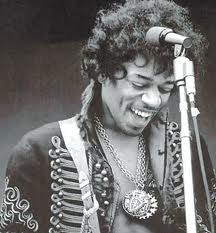
I was 19 years old when I spent an hour with Jimi Hendrix.  It was during the Summer of Love 1967.  

At 3:00 in the afternoon, the limousine carrying Jimi Hendrix and the Experience rolled up to the WBAL-TV studios, over an hour before he was to appear on The Kerby Scott show to perform his latest hit, “Hey Joe.” 

I was one of Kerby’s assistants on the show.  Part of my responsibility was to take the guests into the green room and make sure they were comfortable while they waited for their time on the show.  Jimi and his band set up their equipment and did a quick soundcheck. With still an hour to showtime, I was asked to keep them entertained until then.

First, a little background:  The Kerby Scott TV show was created on WBAL-TV 11 in 1967 as the new Baltimore dance show.  The original dance show was The Buddy Deane Show on WJZ-TV 13.  As any Baltimore native knows, the film Hairspray is a true depiction of what happened on The Buddy Deane Show.  The names were changed to protect the innocent; thus Corny Collins was born. 

As we sat in the Green Room waiting for showtime, Jimi talked to me about experimentation.  He talked about how he strived to get a different guitar sound on every song he recorded.  “Purple Haze” had a completely different sound than “Foxey Lady” or “Hey Joe.”  He said that you could listen to Chuck Berry or Bo Diddley and always know who it was playing; he wanted to make every song sound different.

Jimi and his compatriots, Noel Redding and Mitch Mitchell, talked to me about the recording of the album Are You Experienced?  Jimi said he wanted to get a completely dissident sound for the song “Purple Haze.”  He talked about using an interval of flattened fifth d5 tone.  This was just the part of the conversation that was way out of my league.  But I followed along as much as I could.

After talking about everything from flower-power to transcendental meditation to the embarrassment of being the opening band for the Monkees show in Florida just weeks earlier, we turned our talk to the upcoming appearance on The Kerby Scott TV show.  Typically, the show would open with staff announcer Royal Parker introducing the show and ending with, “And now, here’s Kerby Scott…”  The camera would show Kerby standing at the podium and he would do his opening talk letting people know who was on the show and introduce the first song for dancing.

Today, however, would be different.  When the show started, when Royal introduced Kerby, the camera would show Jimi standing behind the podium.  And so it was.  Jimi Hendrix stood there staring into the camera, which after a few uncomfortable moments widened the shot to show Kerby standing next to him and the show was off and running.

Twenty minutes into the show, Jimi and the Experience performed “Hey Joe” and then did an on-camera interview with Kerby.  When the segment was over, they grabbed their gear and I led the Jimi Hendrix Experience out of the building.  The limo whisked them away and the Kerby Scott Show continued on as if this moment of greatness never happened.  But all us knew that we had just witnessed true genius.

To see the Jimi Hendrix Experience perform "Hey Joe," click here: https://www.youtube.com/watch?v=gUPifXX0foU